Introduction: The Story We Were Told
The most evidence-supported intervention for metabolic health during this transition isn't what you were told. Here's what the research actually says.
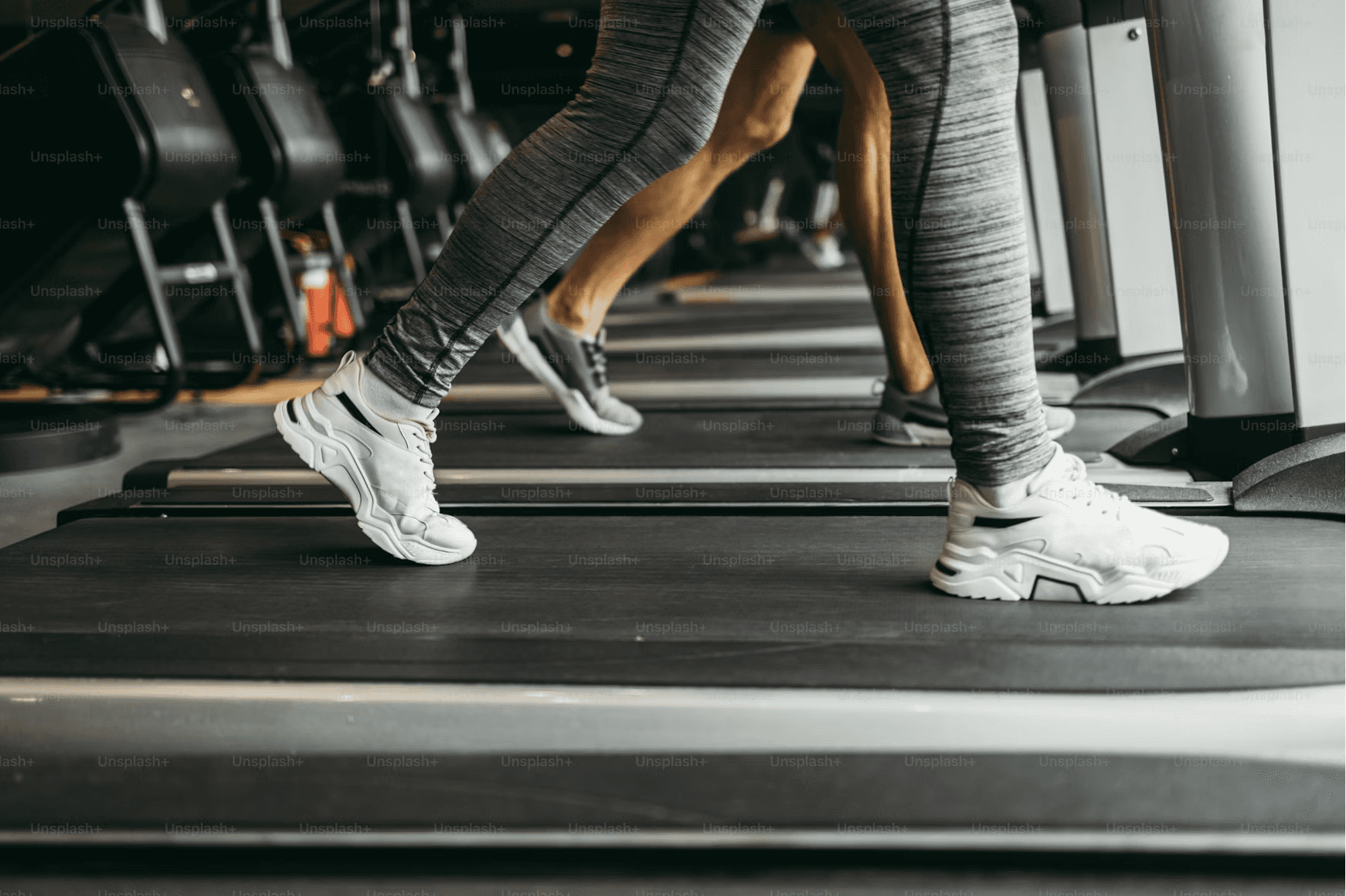
If you spent your twenties and thirties being told that the treadmill was the answer to everything, you're not alone. An entire generation of women was steered towards cardio as the default exercise prescription. Run more, burn more, weigh less. It worked well enough for a while, and then perimenopause arrived and it stopped working.
The research explains why. It also points to something different: resistance training is the single most evidence-supported intervention for the metabolic, bone density, and body composition challenges of perimenopause. Not cardio. Not yoga. Picking up heavy things and putting them down again.
This isn't about becoming a powerlifter or spending hours in the gym. It's about understanding what your body actually needs right now, and why the evidence keeps pointing in the same direction.
You're losing muscle, and it matters more than you think
From your late thirties onward, your body loses muscle at a rate of roughly 3% per decade, accelerating after menopause. This is called sarcopenia, and it's one of the most consequential things happening during this transition, even though nobody talks about it the way they talk about hot flushes.
Muscle is metabolically expensive tissue. It burns calories just by existing. When you lose it, your resting metabolic rate drops. Your body needs fewer calories to maintain itself. If you keep eating the same amount (which is not overeating), weight gain becomes almost automatic. This is one of the key reasons women hit perimenopause and feel like their bodies have stopped cooperating, even when their habits haven't changed.
There's a compounding factor. Oestrogen doesn't just regulate your reproductive system. It primes your muscles to respond to exercise and build new protein. As oestrogen declines, your muscles become less responsive to the stimulus that would normally trigger growth. Researchers call this "anabolic resistance," and it means the same workout that built muscle at 35 produces a weaker response at 50.
The hopeful part: resistance training works anyway. You just need to be more intentional about it. Progressive overload (gradually increasing the weight or difficulty) becomes essential rather than optional. And adequate protein becomes non-negotiable.
What the evidence actually shows
When researchers study what works for women in perimenopause and beyond, resistance training keeps showing up. Not as one option among many, but as the intervention with the broadest evidence base across the most outcomes.
Metabolic health. Your muscles are one of the primary places your body stores and uses glucose. More muscle means better insulin sensitivity. Less muscle means insulin has to work harder, which is how insulin resistance develops. A 2024 systematic review and meta-analysis in Climacteric found that resistance training at a frequency of three days per week significantly improved both upper and lower body strength and functional capacity in postmenopausal women. The metabolic improvements happen regardless of weight loss: your body composition can improve even when the scale doesn't move. If you've read our article on the oestrogen-insulin connection, this is the practical intervention that addresses the biology we described there.
Visceral fat. One of the striking findings is that resistance training reduces visceral fat independently of weight loss. Visceral fat is the deep abdominal fat that wraps around your organs and drives inflammation. You can shift your body composition from metabolically unhealthy to metabolically healthy without the number on the scale changing. If the scale has been your primary metric, this is permission to find a better one.
Bone density. Bone loss accelerates sharply during perimenopause and the years immediately after, driven by falling oestrogen. A systematic review and meta-analysis in the Journal of Orthopaedic Surgery and Research found that moderate to high-load resistance exercise produced meaningful increases in bone mineral density in postmenopausal women, while sedentary women experienced continued decline. When you lift heavy things, your bones respond to the mechanical stress by building density. This isn't just about statistics. Protecting your bone density now means better mobility and independence for decades.
Body composition over time. The BEST (Bone Estrogen Strength Training) six-year longitudinal study found that women who trained consistently maintained their weight and regional fat distribution as they aged. Women in the control group experienced the predictable weight gain and fat redistribution. Six years is a long study. The divergence between the groups was clear.
Sleep, mood, and anxiety. Resistance training improves sleep quality and reduces anxiety. If you're in perimenopause, you know how much sleep disruption and anxiety become part of the experience. This isn't a replacement for HRT or therapy if you need those things, but it's a powerful additional tool.
Starting from zero
If you've never touched a barbell, that's fine. The research doesn't care about your gym experience. It cares about the stimulus.
The evidence supports a minimum of twice weekly, with many studies using three sessions per week. Each session doesn't need to be long: 30 to 45 minutes of intentional resistance work is sufficient. The key principle is progressive overload, gradually increasing the challenge over time so your muscles keep adapting.
Where you start depends on what you'll actually do consistently. Bodyweight exercises (squats, push-ups, lunges) provide plenty of stimulus if you're beginning from nothing. Dumbbells at home are inexpensive and versatile. Gym machines guide your movement patterns and are less intimidating than free weights. Strength-focused classes provide structure and community. If you can afford it, even three or four sessions with a qualified strength coach is one of the best investments you can make at this stage: proper form, a basic programme, and the confidence that you're doing it right.
The best programme is the one you'll actually show up for. The specific tool matters far less than consistency.
Cardio isn't the enemy
To be clear: cardio is not bad. It's important for heart health, mood, and recovery. The evidence doesn't say stop doing it. It says don't rely on it alone for metabolic health and body composition during this transition.
The optimal approach is concurrent training: combining regular resistance work with moderate cardiovascular activity. A randomised controlled trial comparing combined aerobic and resistance training found it effective for improving insulin resistance, glycaemic control, and body composition.
Walking is particularly underrated. It's cardiovascular activity gentle enough to do daily, it supports mood and sleep, it aids recovery from resistance training, and it's associated with better metabolic health. Some of the most effective midlife fitness approaches combine two to three days of resistance training with regular walking and one or two sessions of moderate cardio. Simple. Sustainable. Evidence-based.
The protein piece
Resistance training without adequate protein is like building a house without materials. Your muscles can't repair and grow without the raw ingredients, and because of anabolic resistance, you need more of those ingredients than you did a decade ago.
The general recommendation of 0.8 grams of protein per kilogram of body weight is designed for sedentary adults. It's no longer adequate for you. Current evidence suggests 1.0 to 1.2 grams per kilogram per day for women in perimenopause and beyond, particularly if you're training. For a 70 kg woman, that's 70 to 84 grams per day, distributed across meals in portions of roughly 25 grams each. The distribution matters: research shows that spreading protein across the day is more effective for muscle protein synthesis than loading it all at dinner.
This isn't a full nutrition guide (that's coming). But if you start resistance training without addressing protein, you won't see the results the research says you should.
What this means for you
Your body has changed. The tool that used to work doesn't work the same way anymore. That's not a failure on your part. That's biology, and the biology points clearly to what comes next.
Resistance training addresses the metabolic decline, the muscle loss, the bone density concerns, and the body composition changes of perimenopause more directly than any other single intervention. The evidence on this is not ambiguous. It works.
You don't need to overhaul everything at once. Start with two sessions a week. Keep the walking you already enjoy. Pay more attention to protein. Build from there.
This is the decade to be stronger than you've ever been. Not because anyone is telling you to, but because your body will reward it.
Sources cited in this article:
Sipilä, S. et al. (2019). "Aging of the Musculoskeletal System: How the Loss of Estrogen Impacts Muscle Strength." PMC. Read the study
Ferreira, L.G. et al. (2024). "Resistance Training Effects on Healthy Postmenopausal Women: A Systematic Review with Meta-Analysis." Climacteric. Read the study
Schmitz, K.H. et al. (2007). "Resistance Training Predicts Six-Year Body Composition Change in Postmenopausal Women." PMC. Read the study
Wang, Y. et al. (2025). "Optimal Resistance Training Parameters for Improving Bone Mineral Density in Postmenopausal Women." Journal of Orthopaedic Surgery and Research. Read the study
Dalgaard, L.B. et al. (2020). "Transdermal Estrogen Therapy Improves Gains in Skeletal Muscle Mass After Resistance Training in Early Postmenopausal Women." Frontiers in Physiology. Read the study
PLOS One (2024). "Comparative Effects of Combined Aerobic and Resistance Training Versus HIIT on Insulin Resistance and Body Composition." Read the study
Lim, M.T. et al. (2023). "The Impact of Protein in Post-Menopausal Women on Muscle Mass and Strength: A Narrative Review." MDPI. Read the study
Gregorio, L. et al. (2014). "Adequate Dietary Protein Is Associated with Better Physical Performance Among Post-Menopausal Women 60-90 Years." PMC. Read the study
This article was last updated in April 2026. We review our most-read content quarterly to ensure it reflects the latest evidence. If you believe we've misrepresented the research, please contact us. Read our full editorial standards to understand how we research and evaluate the evidence.